


Popular McIntosh




McIntosh
McIntosh's story begins in the mid-1940s, when Frank McIntosh — a Nebraska-born engineer with a deep love of music and a career that had already spanned Bell Labs, Popular Mechanics, and wartime radio work — was hired as a Washington, D.C. consultant to source high-quality audio equipment for radio and television stations. Frustrated that nothing on the market met his standards, McIntosh brought on engineering assistant Gordon Gow in 1946, and together they set out to build something better.
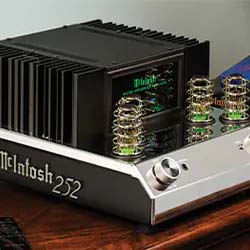
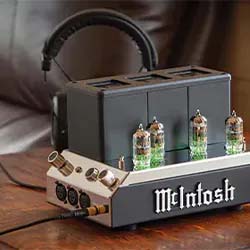
The result was the Unity Coupled Circuit, a groundbreaking symmetrically driven output design that let output tubes deliver power from both their plates and cathodes — patented across five separate filings and still used in McIntosh amplifiers today. Built around that circuit, the 1949 McIntosh 50W-1 delivered an unprecedented 50 watts across the full audible frequency range at less than 1% distortion, a genuine sensation that helped kick-start the entire home hi-fi movement of the 1950s. McIntosh Laboratory was formally founded that same year in Silver Spring, Maryland, before relocating to Binghamton, New York, in 1951 — where it remains to this day.
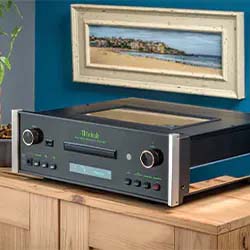
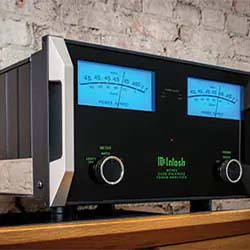
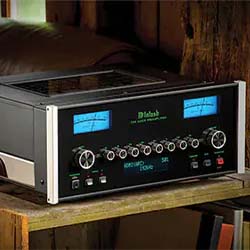
Instantly recognisable by its glowing blue power meters, McIntosh amplifiers have gone on to power some of music history's most iconic moments, from President Lyndon Johnson's inauguration to the Grateful Dead's legendary "Wall of Sound." Still hand-building its transformers in-house in Binghamton, McIntosh continues to combine vacuum tube warmth with modern digital and streaming technology — carrying forward Frank McIntosh's original mission of pure, powerful, low-distortion sound.